Introduction: Budapest, Where History, Art & Nightlife Collide
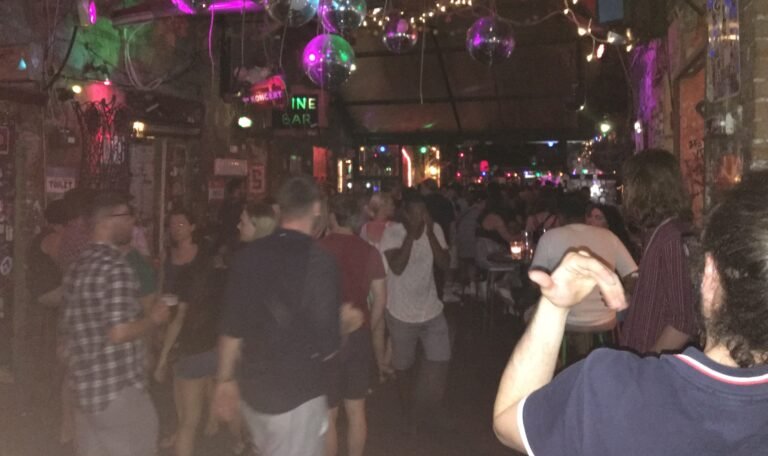
Imagine stepping through a graffiti-covered doorway into a forgotten courtyard where vintage furniture mingles with contemporary art, string lights illuminate eclectic décor, and the energy of hundreds of revelers fills the air.
Welcome to Budapest’s ruin bars—the city’s most iconic nightlife phenomenon. These unconventional watering holes, built in abandoned buildings throughout the Jewish Quarter, have transformed District VII into Europe’s most vibrant after-dark destination. Whether you’re an expat seeking your new local haunt or a tourist chasing authentic Budapest nightlife, this comprehensive guide reveals everything you need to know about ruin bars Budapest has to offer in 2025.
The Story Behind Ruin Bars Budapest
The story of Budapest ruin bars begins in the early 2000s, when the city’s historic Jewish Quarter—District VII Erzsébetváros—was a neighborhood in transition. Decades of neglect had left many buildings abandoned, their once-grand courtyards crumbling and forgotten. But where others saw decay, a group of creative entrepreneurs saw opportunity.
In 2002, Szimpla Kert opened its doors on Kazinczy utca, transforming a dilapidated apartment building into Budapest’s first ruin bar. The concept was revolutionary: embrace the deterioration rather than renovate it. Mismatched furniture salvaged from flea markets, exposed brick walls covered in street art, bathtubs converted into seating—every element celebrated imperfection. The name itself, “romkocsma,” translates to “ruin pub,” perfectly capturing the aesthetic philosophy.
What made Szimpla Kert special wasn’t just its unconventional design. It cultivated a bohemian, artistic atmosphere that rejected pretension. There were no velvet ropes, no dress codes, no expensive bottle service. Just affordable drinks, eclectic music, and spaces that encouraged conversation and creativity. Students, artists, backpackers, and locals mingled freely in rooms decorated with everything from Soviet-era memorabilia to bicycle parts hanging from ceilings.
The success sparked a movement. By the late 2000s, dozens of ruin bars had sprouted across District VII, each bringing its own interpretation to the concept. Some focused on live music, others on visual art installations. Instant became a labyrinthine complex of interconnected rooms spanning multiple buildings. Mazel Tov brought Mediterranean elegance to the ruin bar aesthetic. The Jewish Quarter nightlife scene exploded, attracting international attention and establishing Budapest as a must-visit destination for budget-conscious travelers seeking authentic experiences.
Today, the romkocsma culture represents more than just bars—it’s a symbol of Budapest’s post-communist reinvention, its artistic resilience, and its ability to transform urban blight into cultural capital. The ruin bars have become Budapest’s signature nightlife export, inspiring similar concepts in cities worldwide while maintaining their uniquely Hungarian character.
Top 10 Ruin Bars in Budapest (2025)
District VII Erzsébetváros remains the epicenter of Budapest ruin bars, though the phenomenon has spread to neighboring districts. Here’s your definitive guide to the 15 essential venues that define the scene in 2025, from legendary icons to hidden neighborhood gems.
Planning Your Visit to Budapest Ruin Bars
Best Times to Visit
Timing dramatically affects your ruin bar experience. Arrive between 5:30-7:30 PM on weekdays to secure good seating and skip queues entirely. At Szimpla Kert, lines form after 8 PM, with weekend waits reaching 20-30 minutes. Instant-Fogas sees queues building around 9 PM. Early arrival means no wait and your pick of seating areas.
Friday and Saturday nights deliver maximum energy but prepare for shoulder-to-shoulder crowds after 10 PM. Thursday evenings strike an ideal balance—lively atmosphere without overwhelming masses. For relaxed conversations and easy mobility, visit Sunday through Wednesday. Many venues like Mazel Tov and Kőleves Kert operate as restaurants during daytime hours, offering completely different experiences from their nighttime personas.
Entry Fees and Pricing
Most Budapest ruin bars charge no cover, but exceptions exist. Doboz typically charges 1000-1500 HUF entrance for men while women enter free. Special events, live concerts, and DJ nights may add separate ticket fees at any venue. Dürer Kert operates event-dependent pricing—always check their schedule.
Drink prices remain remarkably affordable compared to Western European capitals. Beer (0.5L) costs 1200-1800 HUF ($2.90-4 USD) at most venues. Budget spots like UdvarROM and Füge Udvar offer the lowest prices at 1100-1200 HUF. Cocktails range 1800-3000 HUF typically, though upscale Mazel Tov reaches 3500-5000 HUF. Wine by the glass runs 1200-2500 HUF. Craft beer enthusiasts pay premium at Élesztőház (1600-1800 HUF) but access superior selection.
Dress Code and Atmosphere
Ruin bars embrace casual, come-as-you-are attitudes. No venue enforces formal dress codes. Jeans, t-shirts, sneakers—all perfectly acceptable. The bohemian ethos rejects pretension. That said, avoid beachwear or obviously dirty clothing. Budapest locals tend toward neat casual rather than sloppy.
Food Options
Hunger need not interrupt your ruin bar adventure. Szimpla Kert serves kosher street food and hosts a Sunday farmers market (9am-2pm) featuring fresh produce, pastries, and breakfast items. Mazel Tov operates as upscale Middle Eastern restaurant—make reservations for dinner service. Ellátó Kert’s Mexican taqueria satisfies late-night cravings. Kőleves Kert functions primarily as Hungarian restaurant. Instant-Fogas offers limited menu plus nearby pizza delivery. Many venues permit food delivery or have adjacent street food vendors.
Accessibility Considerations
Wheelchair accessibility remains challenging at most Budapest ruin bars due to their historic building locations. Expect uneven surfaces, stairs without ramps, narrow passages, and outdoor courtyard layouts. Mazel Tov and Élesztőház provide better accessibility than others. Wheelchair-accessible toilets are rare. Always call ahead to confirm current accessibility features if needed.
Smoking Regulations
Hungarian law prohibits indoor smoking in all public venues since 2012. You can only smoke in designated outdoor areas, courtyards, terraces, and gardens. This includes e-cigarettes and all tobacco products. Most ruin bars feature substantial outdoor spaces specifically for smokers, with courtyards being central to the ruin bar design concept.
Transportation
District VII’s central location makes ruin bars easily accessible. Metro Line M2 (red line) stops at Blaha Lujza tér, placing you within 5-10 minute walk of most venues. Tram lines 4 and 6 run along the Grand Boulevard’s edge. Night buses replace metro service after 11:30 PM. Taxis and ride-sharing apps (Bolt, Uber) operate throughout the city with reasonable fares. Many accommodations in Districts V, VI, and VII put you within walking distance.
Safety Tips
Budapest remains generally safe for nightlife, but standard urban precautions apply. Watch your belongings in crowded venues—pickpockets target distracted tourists. Keep valuables secure and aware. Travel in groups when possible, especially late night. Stick to well-lit streets. Be cautious accepting drinks from strangers. Know your alcohol limits—ruin bars’ affordable prices can lead to overindulgence. Have your accommodation address saved in Hungarian for taxi drivers.
🗺️ The Perfect Ruin Bar Crawl Route:
Start your evening with this logical walking route through District VII, covering approximately 1.5 km:
- 5:30 PM – Füge Udvar or UdvarROM (Klauzál utca 19/21): Begin at these neighboring budget-friendly spots for affordable warm-up drinks in intimate courtyard settings.
- 6:30 PM – Doboz (Klauzál utca 10): Walk 50 meters to this livelier venue as crowds build, catching the transition to party atmosphere.
- 7:30 PM – Ellátó Kert (Kazinczy utca 48): Head to Kazinczy utca for Mexican food to fuel the rest of your night.
- 8:30 PM – Szimpla Kert (Kazinczy utca 14): Arrive before peak queues at the iconic venue, spending 1-2 hours exploring its multiple rooms.
- 10:30 PM – Instant-Fogas Complex (Akácfa utca 49-51): End at this maze-like complex, losing yourself in twenty-six rooms until closing.
This route keeps walking minimal while maximizing variety and managing crowd timing strategically.
Photography and Instagram
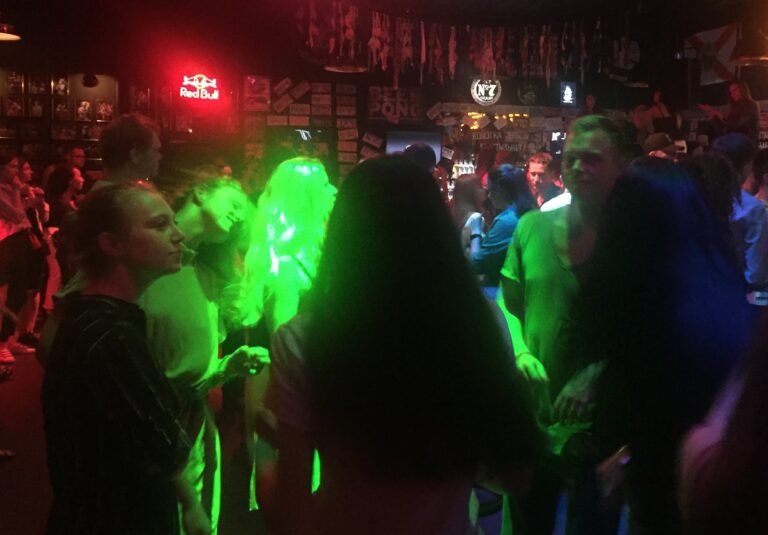
Photography is not only allowed but encouraged in Budapest ruin bars. These venues are designed to be visually striking and Instagram-worthy. The eclectic décor, street art, vintage furniture arrangements, and creative lighting create endless photo opportunities. Use flash respectfully—bright flashes can disturb other guests and damage the ambient atmosphere. Most venues welcome casual photography but may restrict professional video equipment or commercial shoots without advance permission. The Sunday farmers market at Szimpla Kert provides exceptional daytime photography conditions with natural light illuminating the space.
Insider Tips from Locals
Living in Budapest teaches you nuances that guidebooks miss. Here’s what expats and locals know about maximizing your ruin bar experience beyond the tourist basics.
Day vs. Night Transformations
Several Budapest ruin bars operate as completely different venues by daylight. Szimpla Kert’s Sunday farmers market (9am-2pm) transforms the space into family-friendly marketplace with fresh produce, artisan foods, and breakfast options. Mazel Tov functions as upscale restaurant throughout lunch and dinner service. Kőleves Kert primarily serves as Hungarian restaurant before transitioning to bar atmosphere. A Grund opens at 8am as café. Visiting the same venue day and night reveals dual personalities—the afternoon calm versus nocturnal chaos.
Weekday vs. Weekend Dynamics
Weekends attract tourist crowds and bachelor/bachelorette parties, especially at Szimpla Kert and Instant-Fogas. Locals increasingly avoid these venues Friday-Saturday nights, preferring smaller spots like Csendes Létterem, UdvarROM, or venturing to Szatyor Bar on the Buda side. Tuesday through Thursday evenings offer the best balance—sufficient energy without overwhelming crowds. Sunday and Monday see quietest scenes, perfect for conversation-focused visits or working remotely with drinks (several venues offer WiFi during slower hours).
Seasonal Considerations
Summer (June-August) brings peak tourist season when ruin bars reach maximum capacity. The outdoor courtyard designs make them ideal warm-weather destinations. Winter (November-February) thins crowds significantly—locals reclaim their spaces, and you’ll find authentic Budapest nightlife without tourist influence. Many venues add heating to outdoor areas and enclosed sections stay open. Spring and fall provide perfect temperatures and moderate crowds.
Local Etiquette
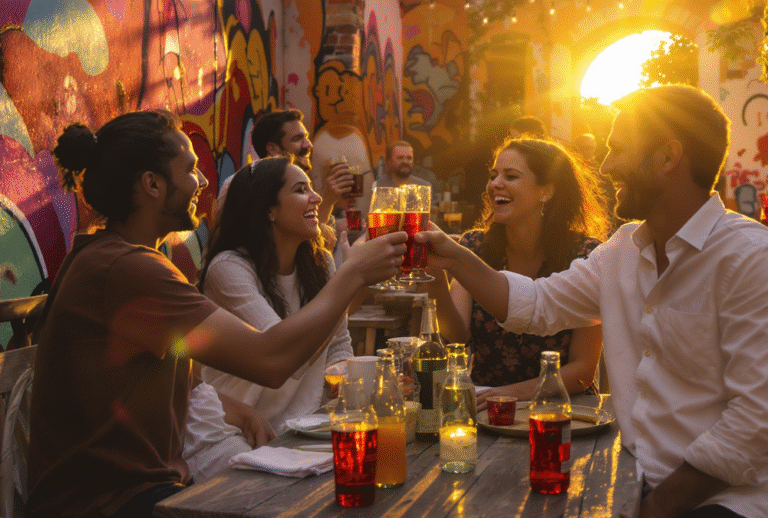
While ruin bars embrace casual atmosphere, some unwritten rules smooth your experience. Don’t reserve large table areas with just drinks and bags while crowds search for seating. Budapest ruin bars operate on shared-table culture—expect strangers sitting at your table, especially during busy periods. This encourages socializing across groups. Hungarian drinking culture involves frequent toasts; if locals include you, participate graciously. When saying cheers, make eye contact and clink glasses properly—poor form is noticed.
Language Tips
English is widely spoken in District VII ruin bars due to heavy tourism, but learning basic Hungarian phrases earns local respect. “Szia” (see-ah) for hello, “Köszönöm” (kuh-suh-nuhm) for thank you, “Egészségedre” (egg-esh-shay-ged-reh) for cheers. Bartenders and staff appreciate efforts even if pronunciation suffers. Some smaller venues have primarily Hungarian-speaking staff—have translation apps ready or point to drinks menus.
Hidden Gems and Avoiding Tourist Traps
Szimpla Kert and Instant-Fogas dominate guidebooks but can feel overwhelming. For authentic local experiences, seek out Csendes Létterem (smaller, intimate), UdvarROM (budget-friendly, neighborhood vibe), or venture beyond District VII entirely. Szatyor Bar in District XI and A Grund in District VIII see fewer tourists. Élesztőház attracts serious beer enthusiasts rather than party crowds. These venues maintain the ruin bar aesthetic without the Instagram-chasing masses.
Money-Saving Strategies
Budapest ruin bars already offer exceptional value, but maximize savings with these tactics. Start evenings at budget venues like UdvarROM, Füge Udvar, or Szatyor Bar before moving to pricier spots. Happy hour deals exist at several venues—A Grund advertises specific promotions. Bring cash (Hungarian Forint) as some smaller venues lack card readers or charge fees. Exchange currency at proper exchange offices rather than airport or hotels for better rates. Many venues sell drink tokens—buying multiple tokens sometimes includes small discounts.
💡 Pro Tip for Solo Travelers:
Ruin bars provide exceptional environments for solo travel. The communal seating, shared-table culture, and casual atmosphere facilitate easy conversations with fellow travelers and locals. Grandio Jungle Bar, attached to a party hostel, specifically caters to solo travelers seeking social connections. Arrive slightly early (before 8 PM), order a drink, and settle into communal areas—you’ll rarely remain alone long.
Beyond the Bars: Nearby Attractions
District VII offers much more than just ruin bars. The Jewish Quarter itself holds historical significance with synagogues, memorials, and museums documenting Budapest’s Jewish heritage. The Dohány Street Synagogue, Europe’s largest, stands just blocks from the ruin bar district. The Holocaust Memorial Tree (Raoul Wallenberg Memorial Park) provides moving historical context.
Late-Night Eating
When ruin bar snacks don’t suffice, these nearby options deliver. Bors GasztroBar (Kazinczy utca 10) serves creative soups and sandwiches until late. Hintaló Vendéglő (Dohány utca 91) offers traditional Hungarian food with late hours. Macesz Bistro (Dob utca 26) provides modern Jewish-Hungarian fusion cuisine. For post-bar munchies, Nagyi Palacsintázója (various locations) serves Hungarian crêpes 24/7. Street food trucks frequently park outside Szimpla Kert and Instant-Fogas, offering kebabs, langos (fried dough), and other quick bites.
Morning After Recovery
Following a full ruin bar night, recover at these nearby spots. Fekete (multiple District VII locations) brews excellent coffee with breakfast options. Dobrumba (Dob utca 5) offers breakfast and brunch in vintage setting. Szimpla Kert’s Sunday farmers market (9am-2pm) provides fresh juice, pastries, and healthy options in familiar surroundings. Kuplung—wait, no, that’s closed. Try Gozsdu Udvar’s passage connecting Király and Dob streets, lined with cafés and breakfast spots.
Alternative Nightlife
If you need a break from ruin bar aesthetics, District VII offers diversity. Morrison’s 2 (club with multiple rooms and dancing), 400 Bar (cocktail bar with extensive spirits selection), and various craft beer pubs dot the neighborhood. The nearby Budapest Eye Ferris wheel provides memorable night views. Cross bridges to Buda for the Fisherman’s Bastion and Buda Castle illuminated at night.
FAQ About Budapest Ruin Bars
What are ruin bars in Budapest?
Ruin bars (romkocsma in Hungarian) are unique bars built in abandoned buildings and courtyards, primarily in Budapest’s Jewish Quarter (District VII). They feature eclectic décor with mismatched furniture, street art, and a bohemian atmosphere. The first ruin bar, Szimpla Kert, opened in 2002, sparking a movement that transformed District VII into one of Europe’s most vibrant nightlife destinations.
Do ruin bars in Budapest have a cover charge?
Most Budapest ruin bars have free entry, making them accessible to budget travelers. However, some venues like Doboz may charge 1000-1500 HUF cover for men on weekends, while entry is usually free for women. Special events, live concerts, and DJ nights may have separate ticket fees. Dürer Kert operates on event-dependent pricing. Always check venue websites or social media for current entry policies.
What time should I visit ruin bars to avoid queues?
Arrive between 5:30-7:30 PM on weekdays to avoid long queues entirely. At Szimpla Kert, queues build after 8 PM with 20-30 minute waits on weekends. For Instant-Fogas, queues start around 9 PM as the venue transitions into full party mode. Arriving before 8 PM generally means no wait and your choice of seating areas. Thursday evenings offer the best balance of energy without overwhelming crowds.
Are Budapest ruin bars wheelchair accessible?
Most ruin bars have limited wheelchair accessibility due to their location in old buildings with uneven surfaces, stairs, and narrow passages. The historic nature of these buildings presents inherent challenges. Mazel Tov and Élesztőház have better accessibility than most venues. Wheelchair-accessible toilets remain rare throughout the scene. Always call venues beforehand to confirm current accessibility features and plan accordingly.
Can you smoke in Budapest ruin bars?
Smoking is prohibited indoors in all Budapest venues since 2012 under Hungarian law. You can only smoke in designated outdoor areas, courtyards, and terraces. This applies to all tobacco products including e-cigarettes and vaping devices. Most ruin bars have substantial outdoor spaces specifically designed for smokers, with courtyards being central to the ruin bar concept and aesthetic.
How much do drinks cost at ruin bars?
Beer (0.5L) costs 1000-1500 HUF ($2.50-4 USD) at most venues. Cocktails range from 1500-5000 HUF ($4-13 USD), averaging around 2500 HUF. Wine by the glass runs 1200-2500 HUF. Prices vary by venue sophistication—upscale spots like Mazel Tov charge premium rates while budget-friendly venues like UdvarROM offer beers starting at 800 HUF. Craft beer at Élesztőház costs 1200-1800 HUF.
Are ruin bars family-friendly or kid-friendly?
Some ruin bars welcome children during daytime hours. Szimpla Kert is family-friendly before 6 PM, especially during Sunday’s farmers market (9am-2pm) which attracts families. Kőleves Kert operates as a restaurant during the day with no age restrictions. Mazel Tov functions as upscale restaurant suitable for families during meal service. Most venues become 18+ only after evening hours when the party atmosphere intensifies.
What is the best night to visit Budapest ruin bars?
Friday and Saturday nights offer the liveliest atmosphere but expect significant crowds and queues at popular venues. Thursday evenings provide an excellent balance of energy and manageable space—locals consider it the sweet spot. Weekdays (Sunday-Wednesday) are ideal for relaxed experiences with shorter queues, easier seating, and more opportunity for conversation. Each night delivers different vibes depending on your priorities.
Do ruin bars serve food?
Yes, most Budapest ruin bars serve food or have food available nearby. Szimpla Kert offers kosher street food and hosts a Sunday farmers market. Mazel Tov specializes in upscale Middle Eastern cuisine requiring reservations. Ellátó Kert operates a Mexican taqueria. Kőleves Kert functions primarily as a Hungarian restaurant. Instant-Fogas has a limited menu with nearby pizza delivery. Many venues permit outside food delivery or have adjacent food trucks and street vendors.
Can I take photos in ruin bars?
Yes, photography is generally allowed and encouraged in Budapest ruin bars. These venues are intentionally designed to be visually striking and Instagram-worthy, with eclectic décor, street art, and creative lighting creating endless photo opportunities. Use flash respectfully and be mindful of other guests’ privacy and comfort. Some venues may restrict professional video equipment or commercial photography without advance permission, so always ask staff if planning extensive shoots.
Find out exactly what ATS scanners see.
Final Thoughts
Budapest ruin bars represent far more than trendy nightlife venues. They embody the city’s creative spirit, its ability to transform abandonment into art, decay into destination. These spaces capture Budapest’s post-communist reinvention—bohemian, irreverent, accessible, and unapologetically eclectic. Whether you’re sipping beer in Szimpla Kert’s bicycle-chandelier room, getting lost in Instant-Fogas’s labyrinthine complex, or discovering UdvarROM’s local charm, you’re experiencing living cultural phenomenon.
The magic of ruin bars Budapest has cultivated lies not in polished perfection but embraced imperfection. The crumbling walls, mismatched furniture, and chaotic décor create environments where conversations flow easily, strangers become friends, and pretension dissolves. They’ve proven that the coolest spaces don’t require million-dollar budgets—just imagination, authenticity, and respect for history’s layers.
For expats, these venues become living rooms where community forms naturally. For tourists, they offer authentic glimpses into Budapest’s contemporary culture beyond tourist-trap restaurants and river cruises. The best Budapest ruin bars balance accessibility with character, affordability with quality, chaos with charm. They’re places where 20-year-olds on budget backpacking trips share tables with 40-year-old professionals, where solo travelers meet lifelong friends, where every visit reveals new corners, new art, new stories.
As you plan your Budapest nightlife experience, remember that ruin bars are meant to be explored, not conquered. Don’t obsess over seeing every venue in one night. Embrace spontaneity, follow recommendations from fellow travelers, get lost in Instant-Fogas’s maze, linger in Szimpla’s courtyard watching crowds ebb and flow. The beauty of Budapest ruin bars lies not in checking boxes but in unexpected moments—conversations with strangers, discovering hidden rooms, witnessing local bands, watching sunrise from outdoor courtyards as parties wind down.
The ruin bar scene continues evolving. Venues close, new spaces open, neighborhoods shift. Yet the core spirit remains constant—Budapest’s insistence that nightlife should be accessible, creative, unpretentious, and above all, human. These aren’t clubs where DJs perform to passive audiences; they’re social laboratories where everyone contributes to the atmosphere. Whether you visit for one night or make them your regular haunts, Budapest’s ruin bars will reshape your expectations of what nightlife can be.