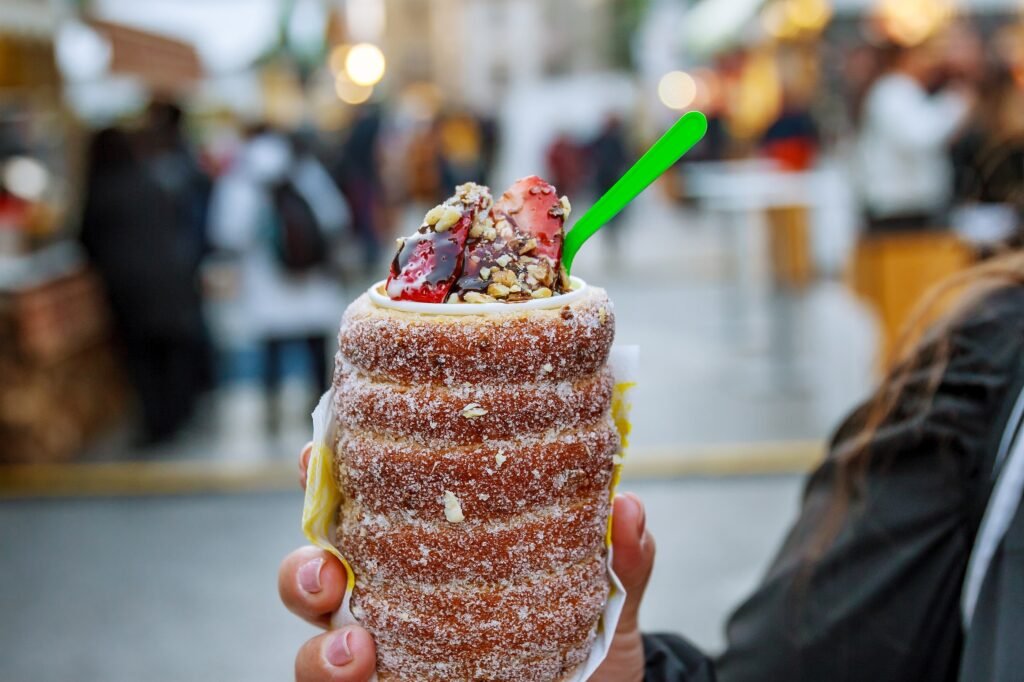
Traditional Chimney Cake (Kürtőskalács) in Budapest: A Local’s Guide to Hungary’s Sweetest Street Ritual
You smell it before you see it.
A ribbon of warm cinnamon-sugar floats through the winter air, curling between the stalls like an invisible invitation. Somewhere nearby, a fire crackles softly. People huddle in scarves and wool hats, hands wrapped around paper sleeves—because the thing they’re holding is hot. Not “fresh-from-the-oven” hot. Coal-kissed, caramelized, can’t-wait-another-second hot.
You take a bite and the first layer snaps—thin, glossy sugar turned to a delicate crust. Then the inside yields: pillowy, yeasty dough with a gentle chew, still steaming. It’s sweet, but not cloying. Cozy, but not heavy. The kind of warmth that makes Budapest feel like it’s holding you back when you try to leave.
That spiral, chimney-shaped pastry? Traditional Chimney Cake, known locally as Kürtőskalács—one of the most iconic things to eat in Budapest, especially when the city is wrapped in Christmas lights and the Danube wind bites just a little.
And if you want to try the real version—beyond the quickest tourist stop—Budapest is full of places where chimney cake becomes more than a snack: it becomes a memory. (Later, I’ll share how to find the authentic kind—and how to taste it alongside other Hungarian classics on a curated food experience.)
What Is Kürtőskalács? (Traditional Chimney Cake Explained)
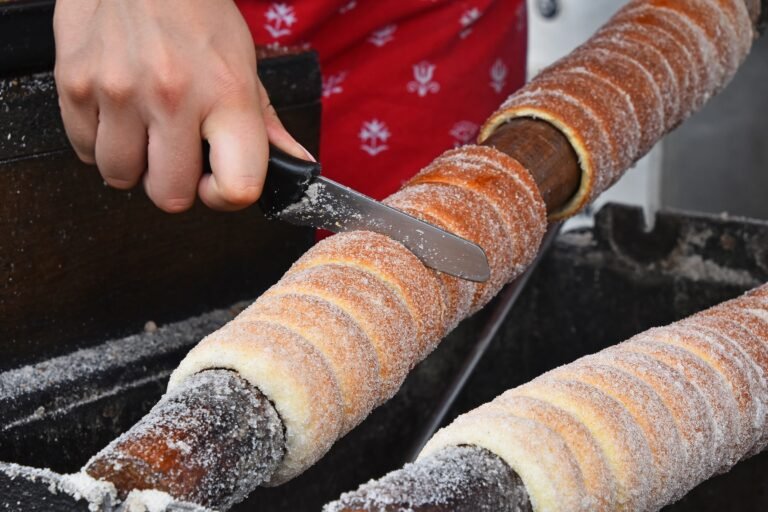
Kürtőskalács (pronounced roughly kur-tuhsh-kah-lahch) is a Hungarian sweet pastry made from yeasted dough, wrapped in strips around a cylindrical spit, rolled in sugar, and roasted while turning over heat until the outside caramelizes.
If you’ve seen it labeled as Hungarian Chimney Cake, that’s the international nickname—because of the hollow center and the way steam rises from it when it’s fresh.
A quick, featured-snippet-friendly definition
Traditional Chimney Cake (Kürtőskalács) is:
- a yeasted dough pastry wrapped around a wooden/metal spit
- roasted over open heat while rotating
- coated in sugar that caramelizes into a crisp crust
- typically finished with toppings like cinnamon, walnut, or coconut
Transylvanian roots (and how it became a Budapest icon)
Kürtőskalács has deep roots in Transylvania, historically tied to Hungarian communities there. For generations, it was a celebratory bake—something you’d make for holidays, weddings, or gatherings when the whole family was around to help roll dough, tend the fire, and sneak the first hot bites.
Over time, the pastry traveled—and like many beloved foods, it found a second home wherever people fell in love with it. Today, it’s firmly woven into modern Hungarian food culture, especially in Budapest’s street-food scene and Christmas markets.
Why it’s called “chimney cake”
In Hungarian, “kürtő” refers to a chimney/flue, and the pastry’s tall, hollow shape resembles one. When it’s fresh, you can literally see the “chimney” effect: steam rising from the center as the sugar crust crackles.
Cultural significance in Hungary
Kürtőskalács sits in a special category of Hungarian desserts: it’s not just something you eat—it’s something you watch being made. That performance matters. It slows you down. It gives you a reason to stand by the stall a little longer, hands warmed by the fire, chatting with friends, or simply absorbing Budapest’s atmosphere.
If you’re building your own Budapest food guide, chimney cake earns its place because it’s equal parts dessert and experience.
How Traditional Chimney Cake Is Made
Here’s where Kürtőskalács separates itself from “sweet bread shaped like a tube.” The magic is in the method.
Step-by-step: the traditional preparation
While every maker has small variations, traditional chimney cake usually follows a rhythm like this:
- A yeasted dough is mixed and rested
Think enriched bread dough: flour, yeast, milk (or water), sugar, eggs, a little butter or oil, and salt. Resting matters because it builds structure and softness. - The dough is rolled and sliced into strips
The dough is rolled into a sheet, then cut into long ribbons. - The spit is prepared (often wooden in traditional setups)
The cylinder gets lightly greased so the dough releases later. - The dough strips are wrapped around the spit
Slightly overlapping, spiral-style—this creates those signature ridges. - It’s rolled in sugar
This isn’t just sweetness—it’s chemistry. Sugar is the future crust. - It’s roasted while turning over heat
Traditionally, this is done over coals. The spit rotates continuously, ensuring even browning. - Caramelization happens in real time
The sugar melts, bubbles, and hardens into that glossy crackle. This is the “you can smell it across the square” moment. - Finishing toppings are added
Cinnamon-sugar, crushed walnut, coconut, cocoa—sometimes applied while the surface is still tacky so it sticks.
The wooden spit baking method (and why rotation matters)
The rotating spit does two key things:
- Even heat exposure creates that uniform golden-brown crust
- Slow roasting keeps the inside tender while the outside crisps
This is why authentic Kürtőskalács has contrast: crisp shell, soft interior.
Why it tastes different from “tourist versions”
Not all chimney cakes are equal—especially in high-footfall areas.
More “tourist” versions often involve:
- pre-baked or partially baked shells reheated quickly
- electric ovens that brown but don’t caramelize the same way
- extra-thick toppings that hide a dry interior
- stuffed, overloaded fillings that turn it into a sugar delivery system rather than a balanced pastry
Authentic versions usually have:
- on-site roasting (you’ll see turning spits)
- a thin, glassy caramel crust (not a soft sugary coat)
- a yeasty, fragrant interior that tastes like real dough, not cake
A good rule: if you can’t see the roasting process—or smell the caramelization—you’re more likely getting a shortcut.
Best Places to Try Chimney Cake in Budapest
Budapest makes it easy to try chimney cake… but the best chimney cake takes a little strategy. Here’s where to look—and what to expect.
1) Budapest Christmas markets (the classic)
If you want chimney cake in its most atmospheric setting, go where the city feels like a movie set:
- Vörösmarty Square Christmas Market
- St. Stephen’s Basilica Christmas Market
Here, Kürtőskalács isn’t just dessert—it’s part of the ritual: lights overhead, mulled wine nearby, friends comparing toppings.
Pro tip: Go slightly off peak hours. Early afternoon often means fresher batches and shorter lines.
2) Street vendors (great when you choose carefully)
Some of the most satisfying chimney cakes come from simple street stalls—especially where locals actually stop.
How to spot a good vendor:
- You see spits rotating over heat
- The pastry is rolled in sugar before roasting (not sprinkled afterward)
- The surface looks lacquered and crisp, not dusty or damp
- You can hear that subtle crackle when it’s pulled off the spit
3) Specialty bakeries (more consistent, less weather-dependent)
A dedicated Kürtőskalács shop can be a safer bet if you’re visiting in warmer months or want consistency. These places often:
- offer more topping options
- bake all day (not just at night)
- sometimes serve coffee pairings that make the pastry feel like a proper stop, not just a snack
Authentic vs modern versions (what to choose)
If your goal is “I want the traditional chimney cake experience,” prioritize:
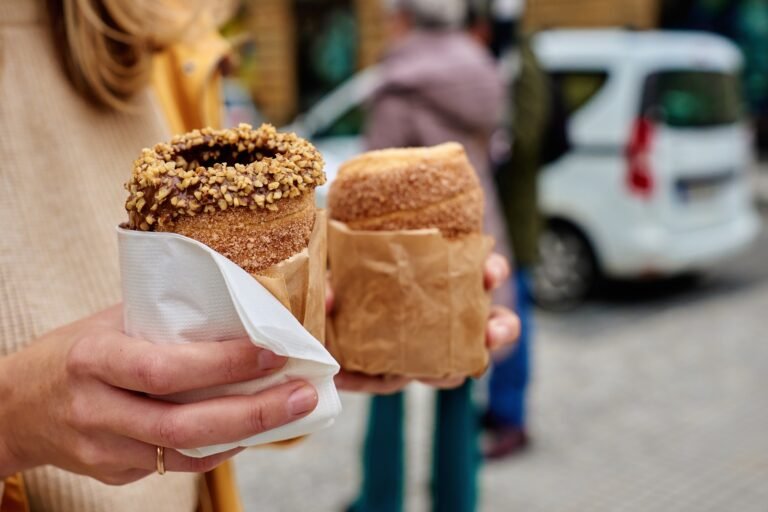
- cinnamon-sugar or walnut
- fresh roasting
- minimal extras
If your goal is “I want something fun for photos,” the stuffed versions can be entertaining—but know you’re drifting into modern street-food territory.
And if you’d rather not gamble on which stall is the real deal, there’s a simple shortcut:
If you want to taste authentic Kürtőskalács as part of a curated food tour (with stops locals actually recommend), you can explore local tasting experiences here
That way, chimney cake becomes one highlight in a broader Budapest food experience—not a stand-alone roll of sugar.
Find out exactly what ATS scanners see.
Chimney Cake Variations You’ll Find
Kürtőskalács comes in variations that range from traditional to wildly modern. Here’s how to choose based on your mood.
Traditional classics (the ones locals recognize)
These are the flavors most tied to tradition:
- Cinnamon sugar – the cozy, aromatic default
- Walnut – nutty, slightly bitter edge that balances sweetness
- Coconut – popular and crowd-pleasing, especially with kids
- Cocoa / chocolate dust – richer but still relatively classic
If you’re trying chimney cake for the first time, cinnamon sugar is the best baseline. It lets you taste the caramel crust and dough without distractions.
Modern favorites (fun, but not “traditional”)
You’ll also see:
- sprinkles, crushed cookies, candy toppings
- Nutella drizzles
- colored coatings designed for Instagram
They’re not “wrong,” but they’re not what someone’s grandmother was making for a celebration.
Stuffed versions (ice cream chimney cake and beyond)
This is the version many visitors recognize from social media: the hollow center filled with:
- soft-serve ice cream
- whipped cream and fruit
- chocolate sauce and toppings
Is it delicious? Often, yes.
Is it traditional Kürtőskalács? Not really.
Think of it like this:
- Traditional Kürtőskalács = the pastry is the star
- Stuffed versions = the pastry becomes a cone
If you’re building a balanced Budapest food guide, I’d treat stuffed chimney cake as a bonus, not the main event.
Why Expats and Tourists Love Kürtőskalács
Kürtőskalács is one of those foods that bridges cultures fast—especially in a city like Budapest, where expats, students, and travelers overlap.
1) It’s comfort food you can eat while exploring
You don’t need a reservation. You don’t need to understand the menu. You just follow the smell and point at the topping you want.
It’s warm, handheld, and satisfying—perfect for:
- walking the Danube promenade
- wandering the castle district
- popping between ruin bars on a cold night
2) It’s tied to seasonal traditions
For many people, chimney cake is emotionally linked to winter: Christmas markets, holiday lights, and that first bite that warms your fingers.
Even if you’re in Budapest year-round, Kürtőskalács can instantly trigger that “festive” feeling.
3) It’s social by nature
Because it’s big, shareable, and theatrical, it becomes a little moment:
- “Let’s split one.”
- “Try the walnut.”
- “Wait—listen to the crust crackle.”
In a city where street food is part of nightlife, Kürtőskalács fits naturally between a drink and the next stop.
4) It feels uniquely “Budapest”
Plenty of places have pastries. But few have a pastry that’s:
- roasted outdoors
- perfuming entire squares
- eaten in the middle of a living city scene
That’s why it shows up again and again in “things to eat in Budapest” lists—and why it remains a top Hungarian street food pick.
Is Chimney Cake Worth Trying?
Short answer: yes—but here’s the honest version that addresses the usual doubts.
“Is it too sweet?”
It can be, depending on the vendor and toppings.
If you want a balanced experience:
- choose cinnamon sugar or walnut
- skip extra drizzles
- share one (it’s larger than it looks)
The best versions aren’t sugar bombs—they’re sweet, warm bread with a crisp caramel shell.
“Is it touristy?”
You’ll see tourists eating it, sure. But that doesn’t make it fake.
Budapest has foods that locals love and visitors love. Kürtőskalács sits in that overlap—especially at seasonal markets.
The more “touristy” part is when it becomes an overfilled dessert cone with ten toppings. If you want a more authentic feel, go simple and watch how it’s made.
“Is it expensive?”
Prices vary by location. In prime tourist areas and Christmas markets, it’s usually more expensive than a standard pastry—because you’re paying for:
- fresh roasting
- time and labor
- location
To get better value:
- buy outside the busiest squares
- share one
- treat it as a street-food experience, not a cheap snack
“Is it authentic Hungarian?”
Yes—Kürtőskalács is a real part of Hungarian dessert culture, with older roots tied to Transylvania and long-standing traditions. Just remember: not every version sold today is traditional in method or style.
If authenticity matters to you, look for:
- rotating spit roasting
- a thin caramelized crust
- minimal toppings
Where to Book the Best Budapest Food Experiences
If you’re only in Budapest for a few days, here’s the reality: the city has too many good bites, and it’s easy to waste meals on average places when you could be eating brilliantly.
This is where a well-curated food tour can help—especially if you want to try:
- Kürtőskalács made the right way
- other Hungarian desserts (strudel, rétes, dobos-style cakes)
- classic savory staples (goulash, lángos, sausages, pickles)
- neighborhood spots you wouldn’t confidently walk into on your own
If you want a value-packed way to taste Budapest with a local rhythm (and naturally include chimney cake without hunting for it), browse food and dessert experiences here:
👉 Chimney Workshop
Why this works (without overplanning):
- you avoid “random stall regret”
- you learn what you’re eating (and why it matters)
- you get a broader Budapest food experience in one go
And if you’re visiting during market season, booking ahead can be smart—Budapest’s popular experiences fill quickly when the city is busiest.
One more helpful place to start:
✅ Budapest food tours & tastings (including dessert stops): Discover Budapest
(That link helps you compare options and pick based on your vibe—market-focused, street-food-heavy, or dessert-first.)
FAQ Section (Chimney Cake in Budapest)
What is Kürtőskalács made of?
Kürtőskalács is typically made from yeasted dough (flour, yeast, sugar, eggs, milk or water, butter/oil, and salt). It’s wrapped around a spit, coated in sugar, and roasted until the outside caramelizes.
Is chimney cake Hungarian?
Yes. Chimney cake—known as Kürtőskalács—has Hungarian roots and is closely associated with Hungarian communities, historically linked to Transylvania and now widely enjoyed across Hungary, especially in Budapest.
Where can I buy chimney cake in Budapest?
You can buy chimney cake at Budapest Christmas markets (like Vörösmarty Square and the Basilica market), from street vendors in busy pedestrian areas, and at specialty pastry shops that roast them throughout the day.
How much does chimney cake cost in Budapest?
Prices vary by location and season. Expect higher prices at Christmas markets and top tourist zones, and better value from less central vendors or shops. Toppings and stuffed versions also cost more.
Is chimney cake available year-round in Budapest?
Yes, you can find chimney cake year-round in Budapest, especially at specialty shops and street-food spots. It’s most atmospheric (and most common) during autumn and winter market season.
What’s the difference between traditional Kürtőskalács and stuffed chimney cake?
Traditional Kürtőskalács is focused on the caramelized crust and soft yeasty interior, usually with simple toppings like cinnamon or walnut. Stuffed versions fill the center with ice cream or creams and are a modern, Instagram-friendly twist rather than a traditional style.
Is Kürtőskalács worth trying if I only have one day in Budapest?
Absolutely. It’s one of the easiest, most iconic Hungarian street foods to try quickly—especially if you pair it with a short food walk or a curated tasting experience.
Conclusion
Kürtőskalács isn’t just a dessert—it’s a Budapest moment.
It’s the pause you didn’t plan for: the smell pulling you off your route, the glow of coals in the corner of your eye, the first crackle of sugar as you bite in and realize you’ve stumbled into something quietly iconic.
Whether you try it at a Christmas market with lights overhead, from a street vendor on a chilly evening, or as part of a full-on tasting adventure, Traditional Chimney Cake is one of those foods that helps you feel Hungary—not just visit it.
And if you want to build a little food memory collection while you’re here—chimney cake included—this is an easy starting point for curated tastings and local-led food experiences: